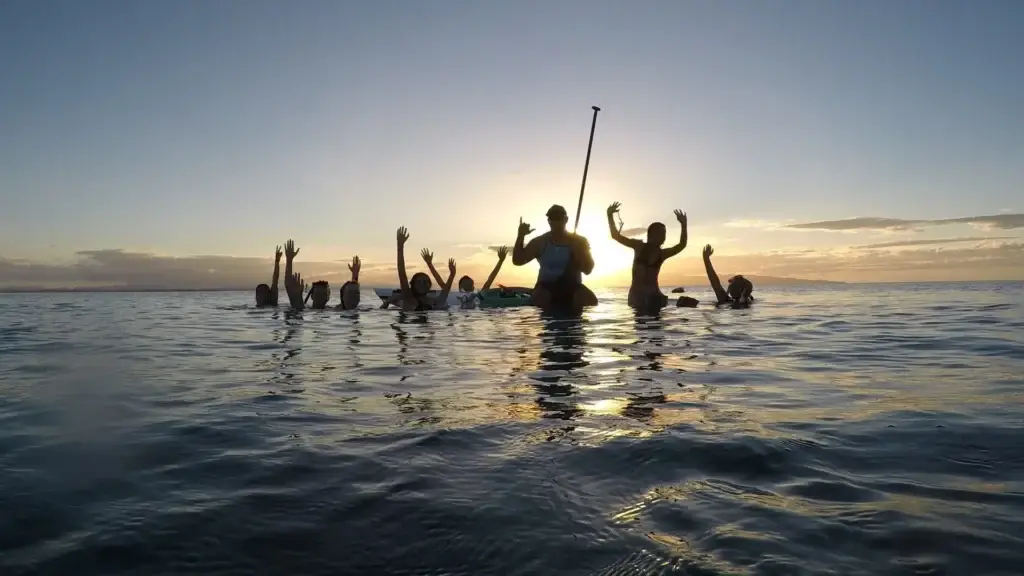
To study biology in Fiji is to see the subject operating at full scale. Coral reefs, tropical forests, wetlands, coastal dunes, wildlife and diverse communities are close enough for students to examine how living systems interact rather than studying each topic in isolation.
That variety makes Fiji much more than a beautiful place to complete a high school credit. It becomes a living laboratory where biodiversity, adaptation, ecological relationships, conservation and human impact can be observed in the environments where they are happening.
Coral Reefs Make Biological Relationships Visible
Fiji’s coral reefs allow students to observe biodiversity, symbiosis, competition and food webs in one connected environment. Concepts that can feel abstract in a textbook become easier to understand when students can consider how corals, fish, algae, invertebrates and environmental conditions affect one another.
Fiji has exceptionally rich marine biodiversity. Researchers have identified more than 1,100 fish species, more than 1,000 marine invertebrate species and approximately 1,000 coral reefs across the country.
This creates opportunities to ask meaningful biological questions. Why do certain organisms occupy particular habitats? How do physical conditions affect species distribution? What happens to a food web when one population declines?
Students begin to see that an ecosystem is not simply a list of organisms. It is a network of relationships that can change when water temperature, habitat quality, pollution, human activity or species abundance changes.
Fiji Connects Marine, Forest and Coastal Ecosystems
Fiji is powerful for biology because students can compare several ecosystems within one destination. Rainforests, freshwater areas, mud pools, gardens, beaches, dunes and coral environments reveal how geology, climate, water and living organisms shape a habitat.
EduTravel’s Biology in Fiji program includes experiences at Colo-i-Suva Rainforest Park, the Sigatoka Sand Dunes, local mud pools and the Garden of the Sleeping Giant. The itinerary also includes marine biology, conservation learning and opportunities to examine Fiji’s plant and animal life.
The Sigatoka Sand Dunes are especially useful for understanding ecological change. The dune system was formed through river erosion and coastal processes, and its vegetation includes native forest and introduced plant communities. Students can consider succession, erosion, habitat stability and the ways organisms adapt to exposed coastal conditions.
Moving between these environments encourages comparison. Students can look at how moisture, soil, salinity, sunlight and human disturbance influence the species able to survive in each location.
Conservation Becomes a Real Biological Question
Conservation makes more sense when students see what is being protected, why it is vulnerable and how scientific decisions are made. Fiji allows students to connect population biology and ecosystem health with practical conservation work.
The current EduTravel itinerary for Biology in Fiji includes an opportunity to participate in the tagging and release of turtles with an environmental officer. Rather than viewing conservation as a broad slogan, students can consider why animals are tagged, what information researchers collect and how data can support decisions about threatened populations.
Students can also examine difficult questions without expecting simple answers. How should tourism be managed around sensitive habitats? How can communities protect biodiversity while supporting local livelihoods? What evidence should guide a conservation strategy?
These questions develop scientific literacy because students must evaluate relationships, evidence and consequences rather than memorize a single correct response.
Local Knowledge Adds Context to the Science
Biology does not operate separately from culture or community. Fiji gives students an opportunity to consider how people interact with the environments on which they depend.
The program includes a lecture and campus visit at the University of the South Pacific, where marine studies are approached through both natural science and marine management. It also includes a visit to a local village, helping students place environmental issues within a social and cultural context.
This matters because successful conservation requires more than biological knowledge. It also depends on local experience, community priorities, resource use, policy and respect for the people who live alongside an ecosystem.
Students learn that field science begins with careful observation, and responsible environmental decision-making also requires listening.
Field-Based Learning Strengthens Scientific Thinking
Field learning asks students to notice details, record evidence and revise their ideas when observations do not match their expectations. These are core scientific skills.
A student might compare organisms across habitats, document visible adaptations or connect an environmental condition to changes in plant and animal life. The goal is not simply to identify what they see. It is to explain patterns and support conclusions with evidence.
This is one of the central benefits of experiential learning for high school students. Direct experience gives students something concrete to analyze, while classroom instruction provides the terminology and frameworks needed to understand it.
The Travel Experience Remains a Real Academic Course
Studying biology in Fiji involves more than visiting interesting environments. The travel experience is integrated into structured instruction, independent work, assignments and assessment.
EduTravel’s current program includes an online orientation and first class, independent learning, mandatory pre-trip classes, destination-based learning and post-trip work. Students can complete either Grade 11 or Grade 12 university-preparation biology, provided they meet the applicable prerequisite.
Families wondering how academic expectations fit around travel can review what it is like to earn a high school credit while travelling. The setting may be extraordinary, but students are still expected to participate, manage deadlines and demonstrate their understanding.
Why Studying Biology in Fiji Stays With Students
Fiji makes biology memorable because students can connect vocabulary and theories to places, organisms and experiences they remember. A food web is no longer only a diagram. Adaptation is no longer only a definition. Conservation is no longer an issue happening somewhere else.
Students return with a clearer understanding of how biological systems function and why protecting them is complicated. They also gain experience asking questions, interpreting evidence and learning in unfamiliar environments.
Families considering the program can attend an EduTravel virtual information session to review the course structure, current itinerary, supervision and travel expectations.
Frequently Asked Questions
Is Biology in Fiji a real high school credit course?
Yes. EduTravel currently offers Grade 11 University Biology and Grade 12 University Biology through the Fiji program. Students must meet the prerequisite for their selected course and complete the required instruction, assignments and assessments.
Is the Fiji program only about marine biology?
No. Coral reefs are an important part of the experience, but students also explore rainforest, wetland, botanical and coastal environments. This range helps them compare biodiversity, adaptation and ecological relationships across several types of habitat.
Do students need previous fieldwork experience?
Students do not need to arrive as trained field researchers. They should be curious, prepared to participate and willing to record observations, ask questions and apply concepts from their course.
How does studying in Fiji differ from learning biology in a classroom?
A classroom provides essential concepts, vocabulary and scientific models. Fiji gives students direct environments in which to test those ideas, observe relationships and use real examples to support their conclusions.