Earning a credit while travelling is still real school, but it rarely feels like the version you are used to. The best way to describe it is that your course goals stay the same, but your classroom changes every day.
That’s why student travel for credit programs is such a different experience. You are not trying to recreate your regular timetable in a new country. You are learning through what you are actually doing, seeing, tasting, listening to, and talking about, then turning those moments into the assignments your course requires.
The daily rhythm is real, it just doesn’t look like a timetable
Most days have a rhythm. You start with a plan, you move through experiences that connect to the course, and you circle back to reflect, write, discuss, or prep for what’s next. That might mean time in the morning for conference time, a guided visit or activity during the day, then some work time in the late afternoon or evening when you are back at your accommodation.
The honest truth about homework
Yes, you will have assignments. But it’s not the same as being at home or in class doing summer school.
The coursework feels more connected because you are referring to your experiences and conversations you just had. If you have ever struggled with “write a paragraph about this topic” when the topic feels far away, travel-for-credit flips that. You have built-in examples.
A trip like Discover Italy (July) is a great example of how that connection works. You are reading and writing with the backdrop of real settings, real history, and moments that make ideas stick. When a story mentions Venice or Pompeii, those words stop being abstract.
Learning happens “in the moment,” but it still meets course goals
This is the part most people misunderstand. Just because learning feels spontaneous does not mean it is random. Your course still has expectations and outcomes. The difference is how you get there.
We talk about this balance in our educational tour FAQs, especially the idea that teens get meaningful independence while still being supported and guided. You are not left to figure it out alone. You are given real experiences, then you are shown how to connect them to the high school credit you are earning.
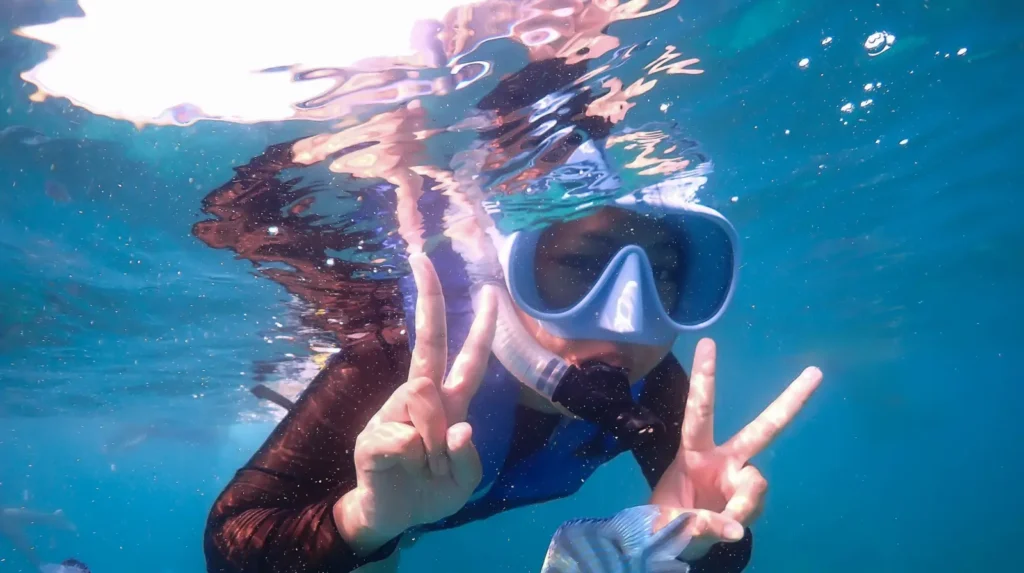
In Fiji, for example, the “lesson” can be standing near a reef, seeing how fragile an ecosystem is, and then bringing that observation into your Biology work later. That is why programs like Biology in Fiji (July) can feel so different from reading a chapter and answering questions. You are still learning the material. You are just learning it with your senses switched on.
Independence is part of the course, even when nobody calls it that
One of the biggest surprises for many teens is how quickly they start doing things on their own, in a good way. You manage your time. You show up on time because you want to, not because someone is texting you from the kitchen. You keep track of what you need each day. You learn how to be a good roommate and a good travel buddy.
That “you grow up a bit” feeling is not an accident. Our post on experiential learning explains the way real-world learning can build self-reliance. It is not about being perfect. It is about proving to yourself that you can handle more than you thought.
Friendships form faster than you expect
There is something about travelling with a group that speeds everything up. You are sharing meals, navigating new places, laughing at the same moments, and learning together. Even if you are quiet at first, it is hard to stay on the outside when everyone is having the same experience.
Language trips are especially good because you end up practising together constantly. On French Connection (July), for example, you are not only learning French in class-style moments. You are using it in daily life, then comparing notes with friends later. You will have inside jokes by day two. You will also realise you are braver than you thought.
Some experiences go deeper than landmarks
Not every trip is about beaches and landmarks. Some are built around stories, identity, and learning that ask you to think more deeply.
Programs like Equity and Social Justice in Halton Region (July) are designed for students who want to understand history through lived experience and direct engagement with places and narratives that matter in Ontario. It can feel intense at times, but it can also be the kind of course you remember long after graduation because it changed how you see the world.
If you want learning that blends English credit work with place, identity, and Truth and Reconciliation learning, Indigenous Voices on the West Coast (July), is built around listening, discussing, and writing with contemporary Indigenous perspectives in mind. It is the kind of program that makes class discussions feel real, because they are happening in real settings with real context.
“But I’m not a school person!” That’s kind of the point
A lot of students who do well on travel-for-credit are not the ones who love sitting still for hours. They are the ones who learn better when they can move, ask questions, and connect ideas to something concrete.
If you want a quick sense of why this style of learning is taken seriously, Ontario has guidance on experiential learning and specialized programs that explain how learning can happen beyond a traditional classroom when it is planned properly.
And if your program includes travel outside Canada, it is also smart to read the Government of Canada’s practical tips for travellers your age, especially around being prepared and making safe decisions.
If you’re curious, here’s what to ask before you commit
You don’t need to have every detail figured out. You do need to know what kind of experience you want. Do you want hands-on science? A language immersion vibe? A reading and writing journey through a place that makes literature feel alive? A program that challenges how you think?
If you want help choosing the right fit, or you want to understand the course expectations in plain language, talk to your parents and contact us. We’re here to help.
FAQs
Will I have homework every night?
Most programs include regular work time, but it usually feels manageable because you are writing or reflecting on what you experienced that day.
What if I’m nervous about travelling without my parents?
That’s normal. These trips are designed to build independence with support, and most students find their confidence grows quickly once they settle into the routine.
Does it still count as a real credit?
Yes. The course requirements are still met. The difference is how you learn the material and how memorable the learning becomes when it is tied to real experiences.